













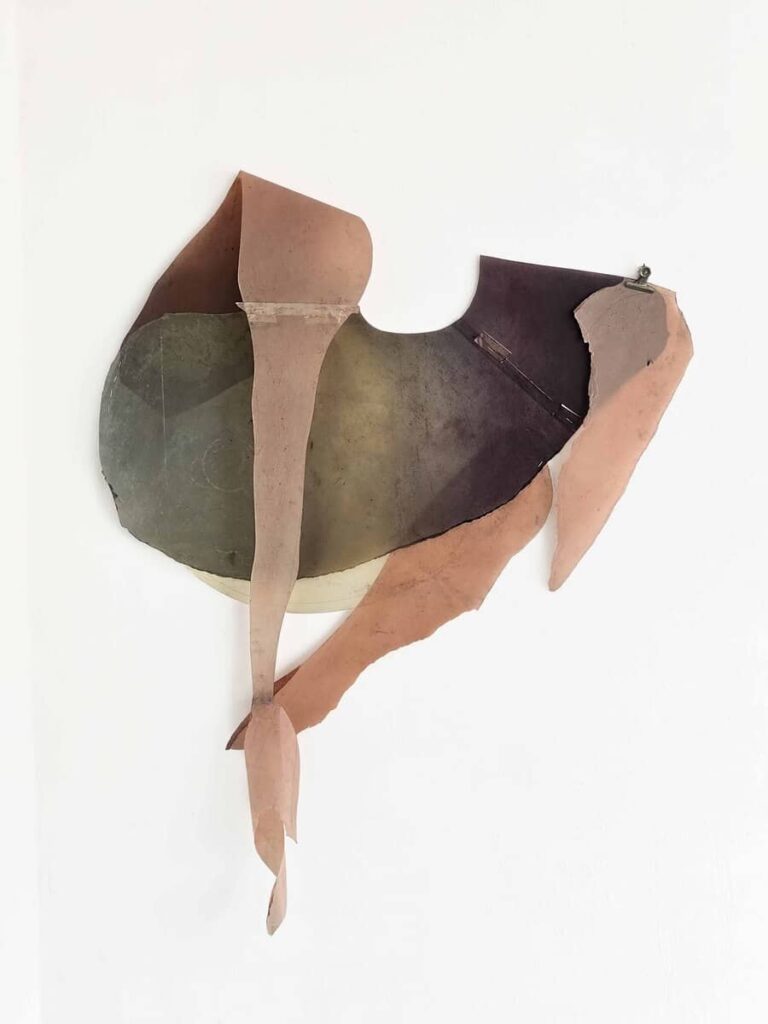














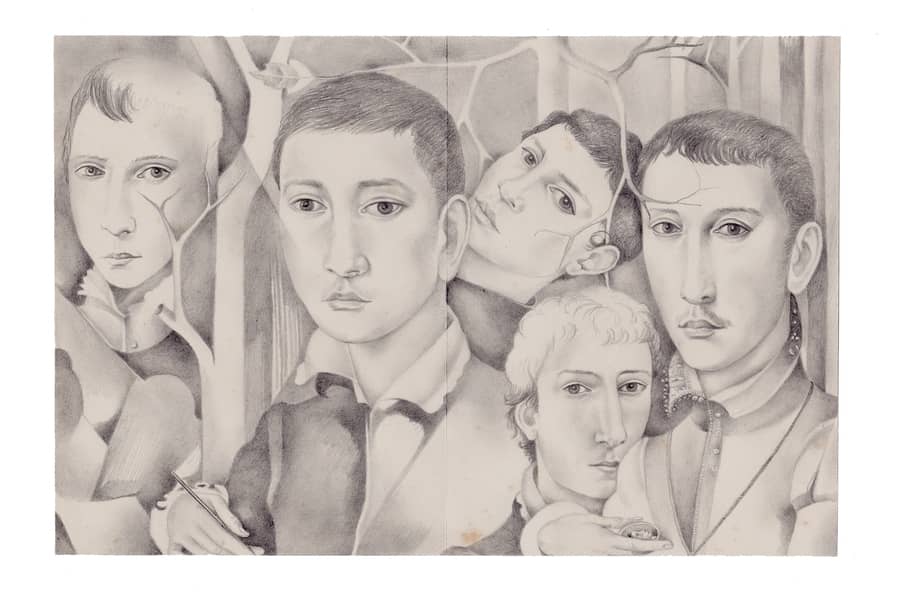

Raquel Serrano (1995, Huelva) graduated in Fine Arts and earned a Master's degree in Art: Idea and Production, where she received the Extraordinary End-of-Studies Award from the University of Seville. She is currently an Interim Substitute Professor in the Department of Drawing, a PhD candidate in the Art and Heritage Program, and a researcher in the HUM822 group: Graphic Design and Digital Creation at the University of Seville. In 2022, she expanded her training with an artistic research stay at the University of the Arts London.
Her work has been presented in solo exhibitions at Espacio Laraña, DiGallery, ArteSantander, and, most recently, at the Centro Párraga in 2024. In 2019, she was selected for the "A Secas, Andalusian Artists of Now" conference organized by the CAAC, and in 2020 she participated in the "Encuentros de Arte" residency at Genalguacil. She has participated in the International Emerging Graphic Arts Conference, OPEN PORTFOLIO, FIG BILBAO 2019, and in international fairs such as ARCOmadrid, at the Genalguacil Pueblo Museo stand in 2021 and 2022 with the Huelva Provincial Council, as well as at the Estampa fair in 2021 and 2022 with DiGallery. In 2023, she received the INICIARTE grant, where she completed a solo project for Casa de Porras in Granada. Her works can be found in the collection of the CAAC and the MAC in Genalguacil.
The research project she has been developing in recent years focuses on the relationship between images and the various modes of visual perception. Her fascination lies in exploring how images are created and reproduced, as well as in contemplating reality from the wide range of perspectives offered by visual media.
With the aim of unraveling the inherent tensions between reality and its representation, her practice develops through experimentation in the field of graphic art. This discipline gives her the freedom to work with multiple techniques, tools, and materials, allowing her to address the physical properties of images, considering them not only as visual representations, but as objects with a tangible and meaningful presence in themselves. They are images that inhabit space.
Her creative process involves a constant transformation of the image through procedures such as repetition, fragmentation, and printing, with a focus on detail and form. Each element contributes to a multidimensional visual experience, challenging the viewer to question their relationship with what is observed.
Currently, his research focuses on simulation, trompe l'oeil, and the interplay between reality and fiction, opening up spaces for new worlds and new images.
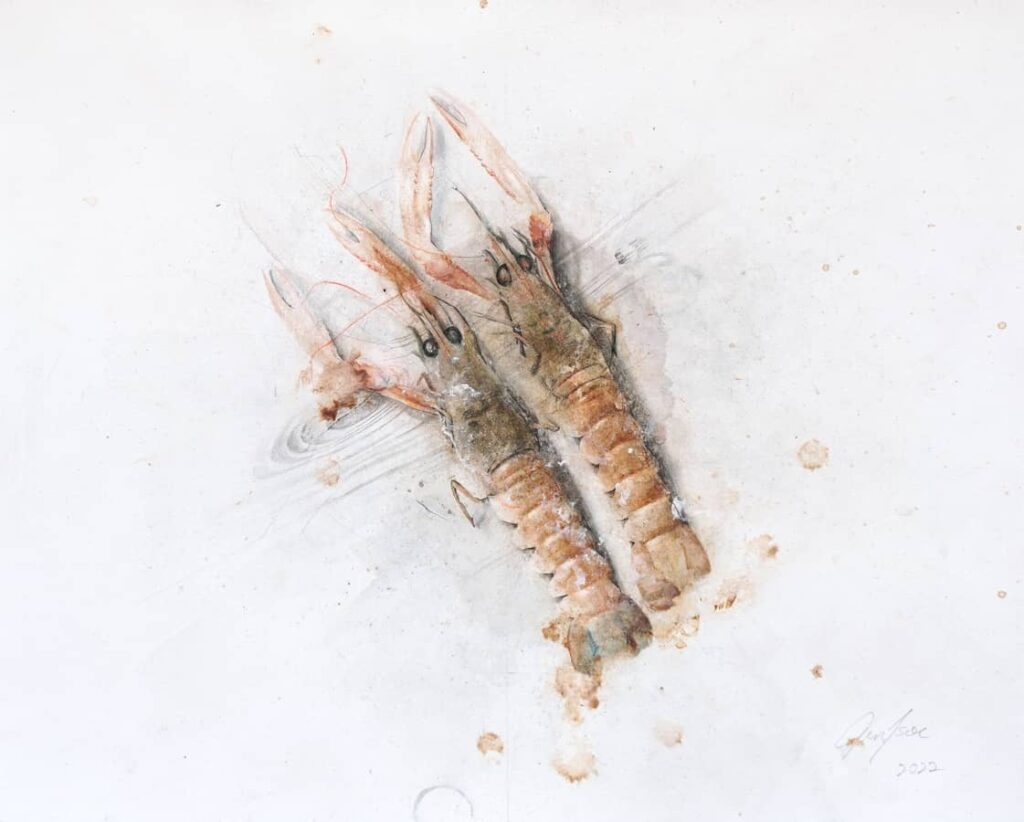
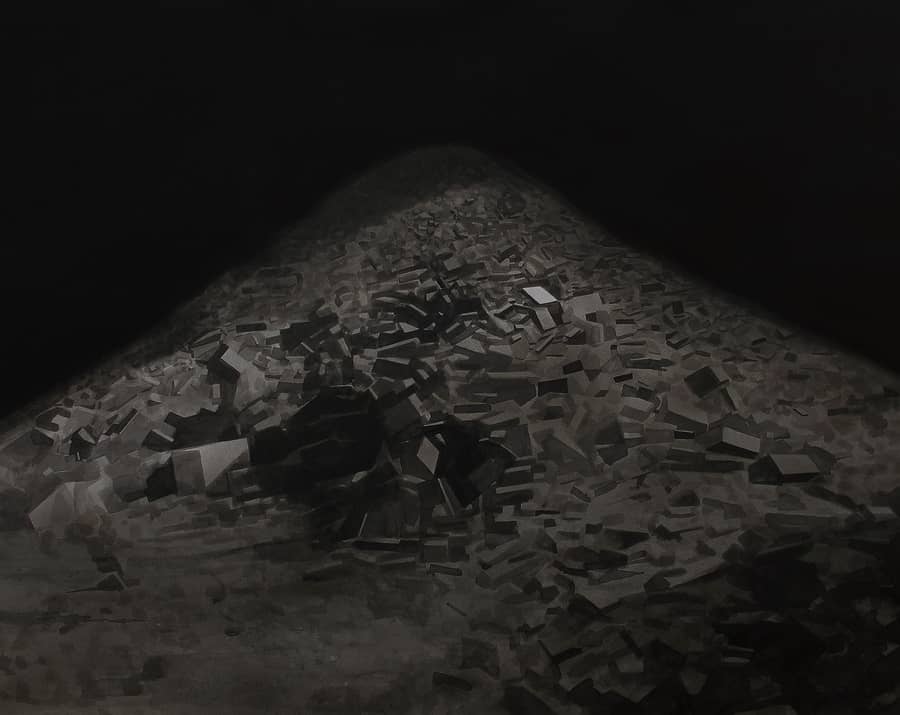
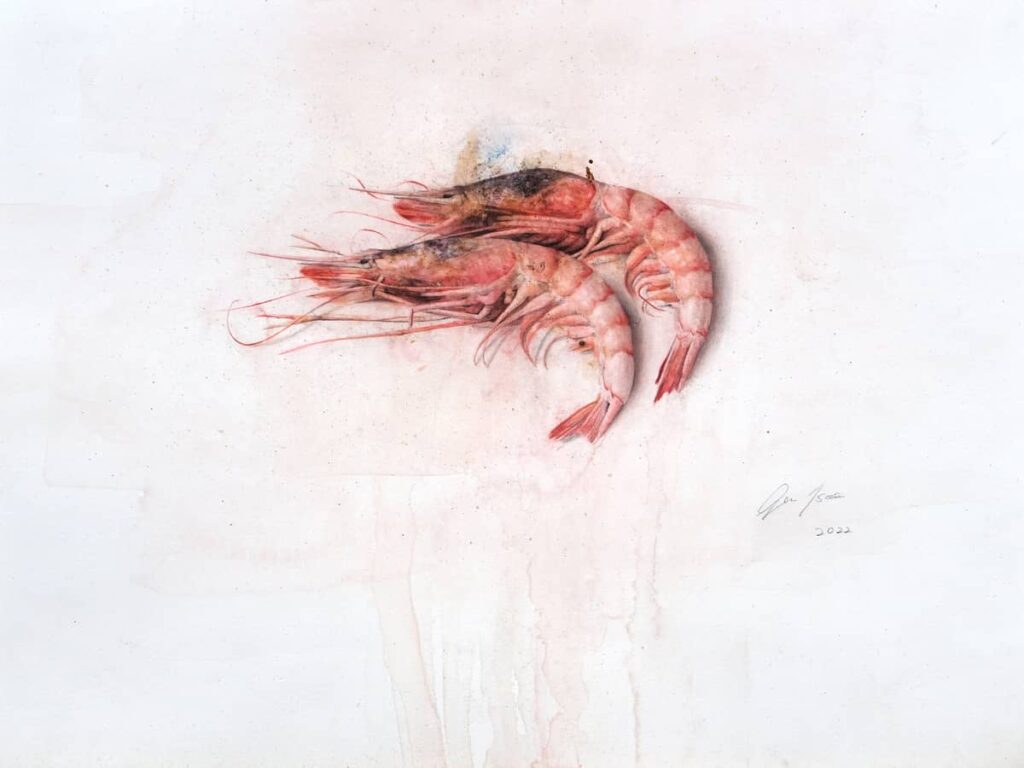
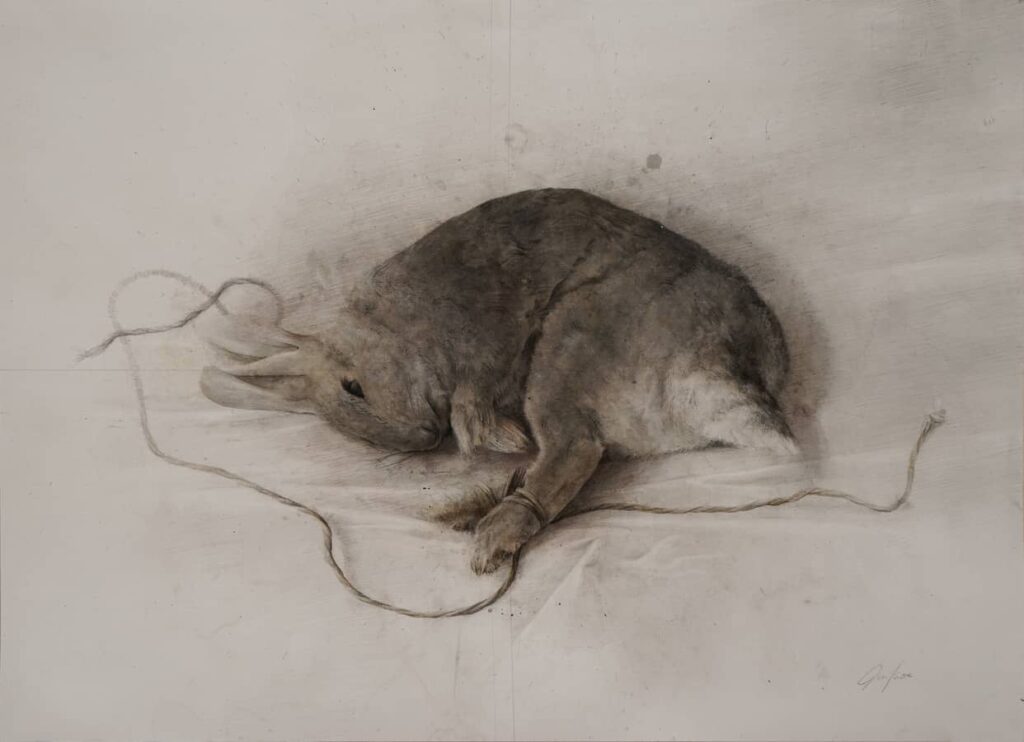
Gen Isoe (Madrid, 1988). Artist born in Spain but of Japanese descent, he currently lives and works in Madrid. His work primarily focuses on painting and drawing. He completed his university studies in the field of Social Arts in Policy Management ("Arts in Policy Management," Kwansei-Gakuin University, Kobe, 2008–2012), returning to his hometown in 2014 to dedicate himself to artistic creation. His work is based on description and recognition; he does not seek to create a perfect copy of reality, but rather uses it simply as a reference. He positions himself as a witness and cannot ignore that the perception of a living being implies a position, a capacity, knowledge, movement... and, therefore, there is an implicit distortion in his observation. His work stems from a cognitive process centered on meticulous description, seeking to synthesize in an image what he, as a specific individual, is capable of perceiving, revealing a strong interest in existentialism.
His work has been exhibited in different galleries in Madrid and he has participated in numerous national and international competitions, being selected for various exhibitions and having obtained mentions and awards for his work, among which stands out the first prize received in the LXI International Drawing Competition of the Ynglada-Guillot Foundation (Barcelona, 2024) .
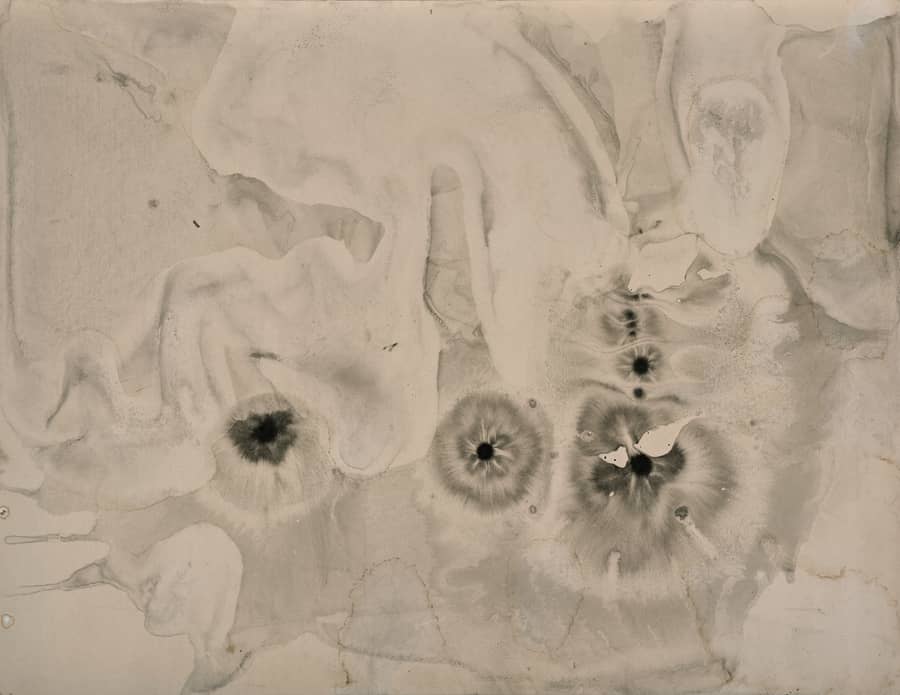
Altea Grau is an artist and researcher living and working in London. In 2020, she received her PhD in Fine Arts from Chelsea School of Art (University of the Arts London) with a scholarship from the same university and the Dávalos Fletcher Foundation. She subsequently completed a postdoctoral program at the University for the Creative Arts, Canterbury (Kent, UK) and currently combines her artistic practice with teaching Fine Arts at the Slade School of Fine Art and Goldsmiths University London.
Altea Grau's work explores the confluences between different poetic languages. Through ideas closely linked to the concept of the book, such as duality, echo, reflection, and the notion of the sheet, the artist develops her own discourse where the notion of the page extends, becoming an expanded space. Altea explores the meaning that arises from our interaction with a language that can be visual, spatial, or material, evoking connotations and sensations associated with the dual format of the works. A space where the materiality of image, text, ink, and paper coexist, challenging and unmasking conventional communication processes.
Grau has won several international awards, including the Elephant Trust Grant, and has been selected for exhibitions such as the Royal Academy Summer Exhibition, Trinity Drawing Prize, and the Woolwich International Print Fair. Her work has been acquired by various institutions such as the Tate Modern Special Collection, Chelsea Library Special Collection, V&A Art Library London, DKV Collection, Harold Berg Collection, Faber Birren Collection, the Generalitat Valenciana, and the Diputació de Castelló.

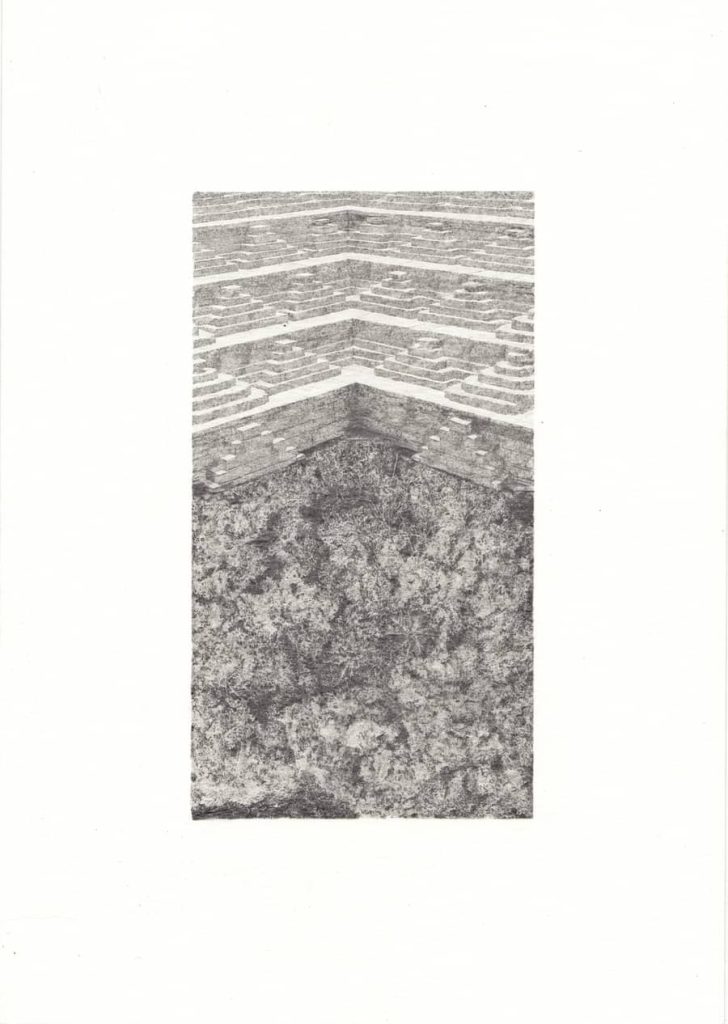
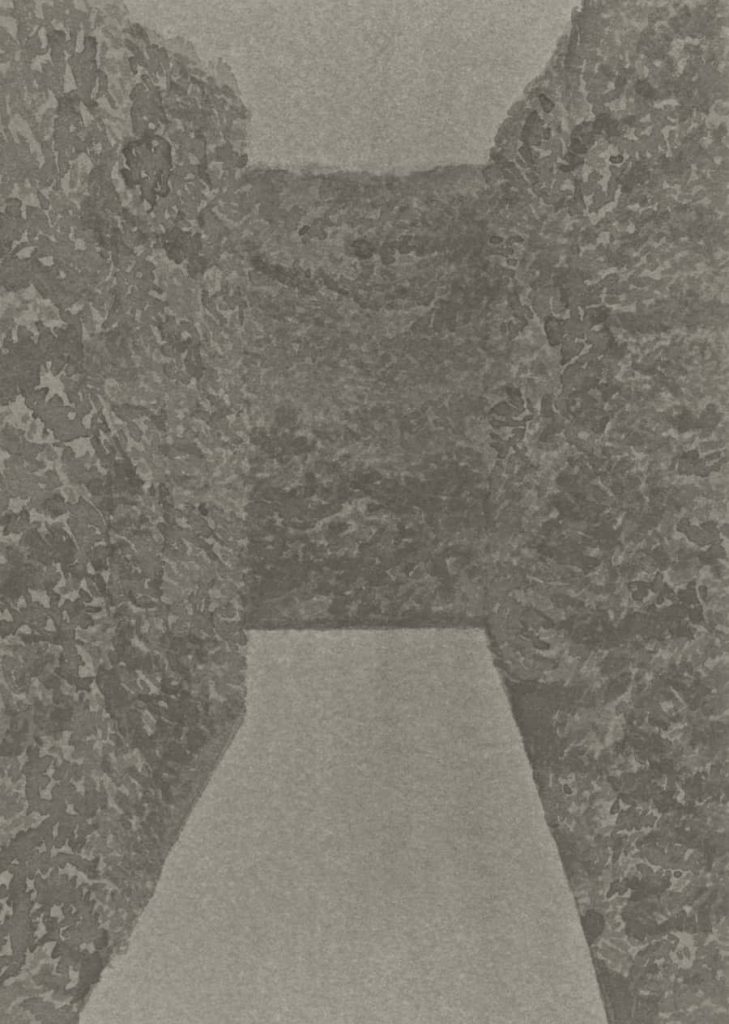
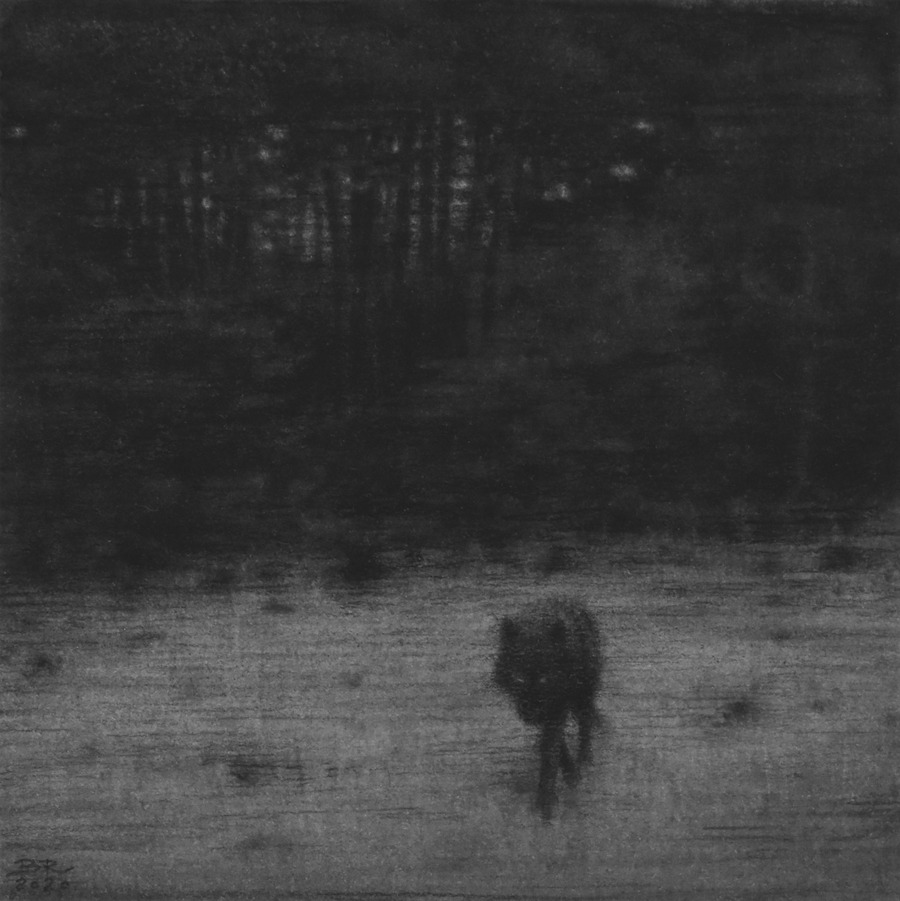
Bartolomé Rey (Pinilla de los Barruecos, 1964) studied drawing at the Academia del Consulado del Mar in Burgos. Since 1988, when he opened his first solo exhibition, he has participated in several solo and group exhibitions in galleries in Spain, France, Portugal, the United States, Germany and China, as well as in national and international art fairs such as Artcologne (Cologne), Artesantander and Artsevilla. In the series Cosas que pasan (Things that hapenned), started in 2020, the author explores the limits of reverie. Reality understood as a pretext, from which to cement the elaboration of paradoxically subjective sensations and interpretations.

Manuela Tabarés (Madrid, 2000). Graduated in Fine Arts at the Complutense University of Madrid, Manuela lives in Prague with a scholarship from FMM to study at the British school Prague College and develop her master's degree. She is a resident with a scholarship from the Jacaranda (September 2022) and from the commission of the itinerant collective residency 3x3=6 (July 2023). She has received training beyond the university circle, such as at Alejandro Chamorro's specialised jewellery school (September 2021-July 23) or at the four-month drawing workshop given by the artist Raúl Domínguez (Bilbao 2021). He has also participated two consecutive years in the V and VI Edition of the "José Carralero" School of Landscape Painting (July 2022 and 2023). During his degree studies he has collaborated in several group exhibitions such as Anatomopoeia. La enseñanza de la anatomía artística en el siglo XXI, held in Ávila in the halls of the Palacio de Los Serrano of the Fundación Caja Ávila (July 2022) and has several pieces in the deposit of the Faculty of Fine Arts of the Universidad Complutense de Madrid, Department of Drawing and Engraving.
In recent years she has also devoted herself to teaching. Her teaching programmes include Jewellery: drawing musical instruments in space and Plastic Consciousness, as part of the About programme, in Bamako (Mali, May 2023), at the National Institute of Arts (INA).
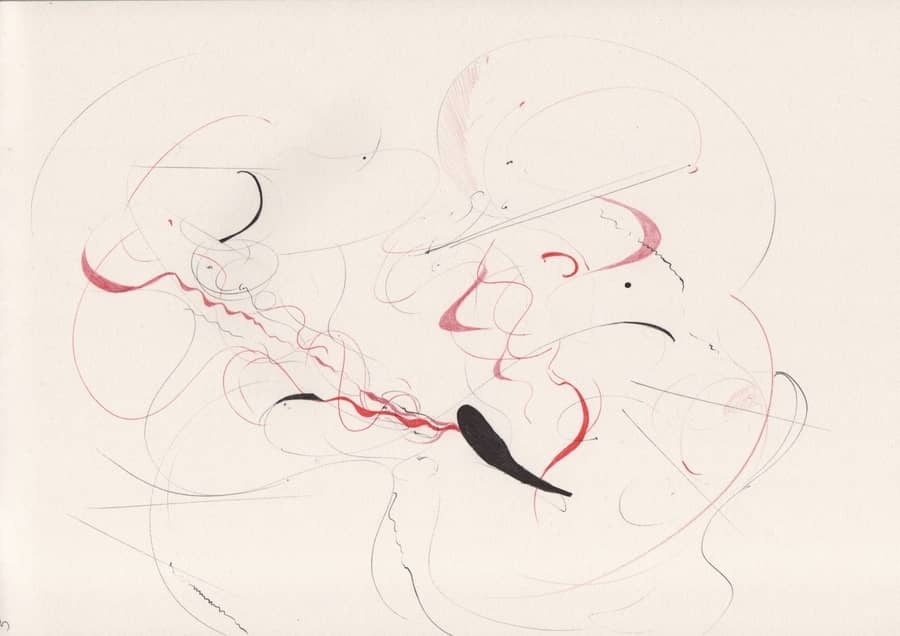
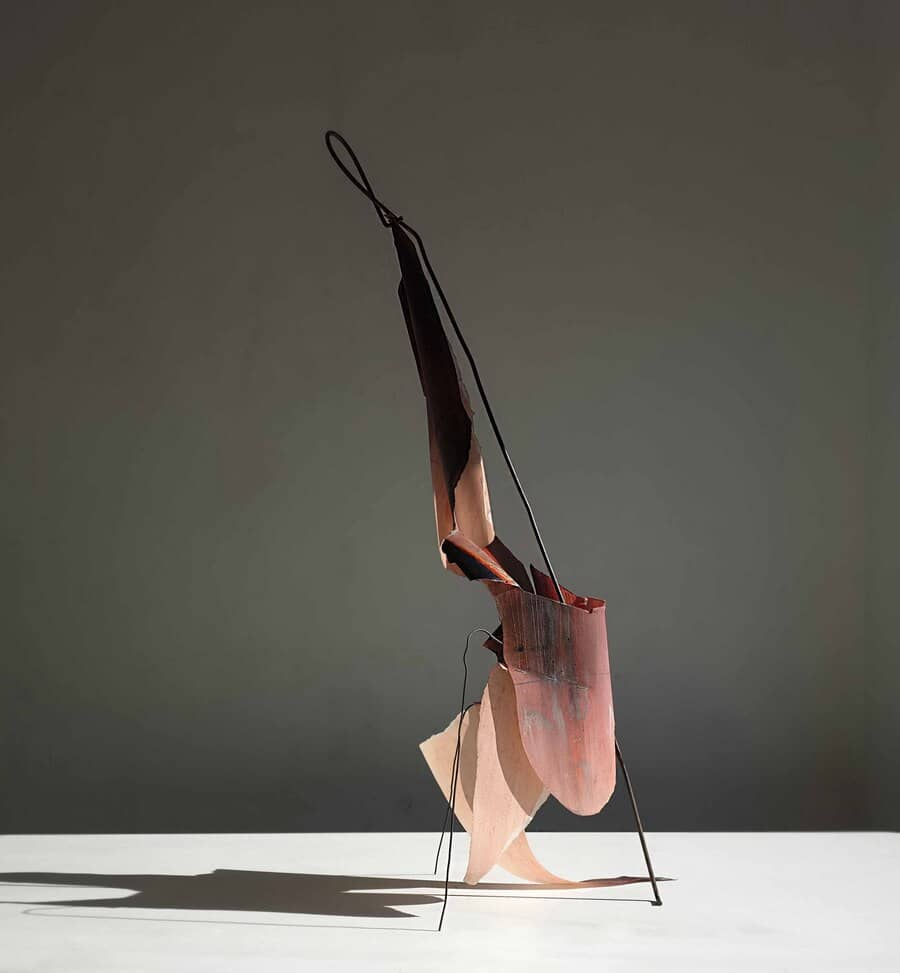
Manuela's work is closely linked to drawing; to spatial and sound representation.It is part of her daily practice and serves as a support to structure her abstract thinking.
Portrait © Dragan Dragin.

Sofía Jack (Figueres, 1968). She graduated in Fine Arts from the Complutense University of Madrid and later furthered her training with Gerhard Richter, Zush, Vito Acconci and Katherina Sieverding. She has also received various grants, including those awarded by the Fundación Barrié de la Maza (HDK, Berlin), Unión Fenosa and the Academy of History, Archaeology and Fine Arts in Rome, as well as prizes from the Fondazione Antonio Ratti (Italy) and the Colegio de Ingenieros de Caminos de Madrid.
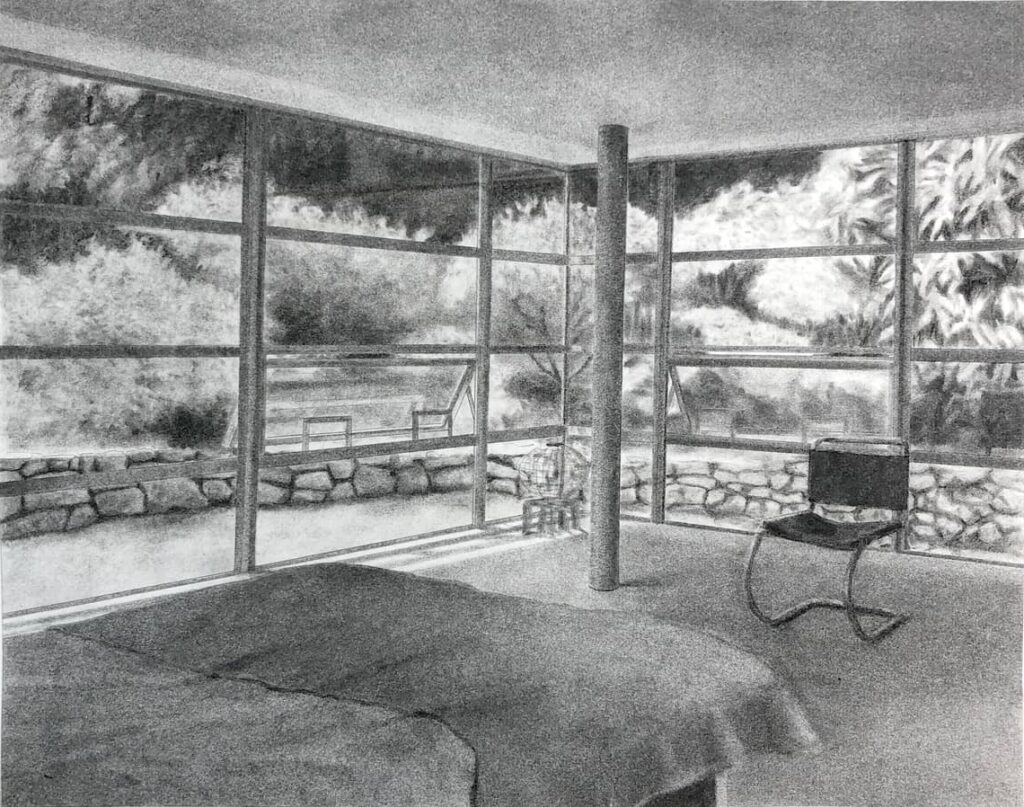
Throughout various projects she addresses the complex and uncomfortable negotiation between utopia and reality. In her charcoal drawings she recreates places that incarnated modern rationality in order to investigate its reverse side, and how the human -desires, fears, affections and feelings- cracks an idea of reason and order that becomes utopia. Sometimes they are imaginary solutions - machine-houses capable of adapting to the needs of their surroundings and their inhabitants- or else they are spaces of rationalist architecture in which he develops a psychological, emotional and affective fact, as a mirror of our personal and non-transferable life story.
Her work is represented, among other institutions, in the Museo de la Real Academia de Bellas Artes de San Fernando, the CGAC, the Colegio de Ingenieros de Caminos, Canales y Puertos de Madrid, INJUVE, Museo de Arte Contemporáneo Unión Fenosa, Ministerio de Asuntos Exteriores, Diputación A Coruña, Fundación la Caixa, Museo Patio Herreriano, Comunidad de Madrid or the Colección de Arte Contemporáneo de la UNED, as well as in numerous private collections.
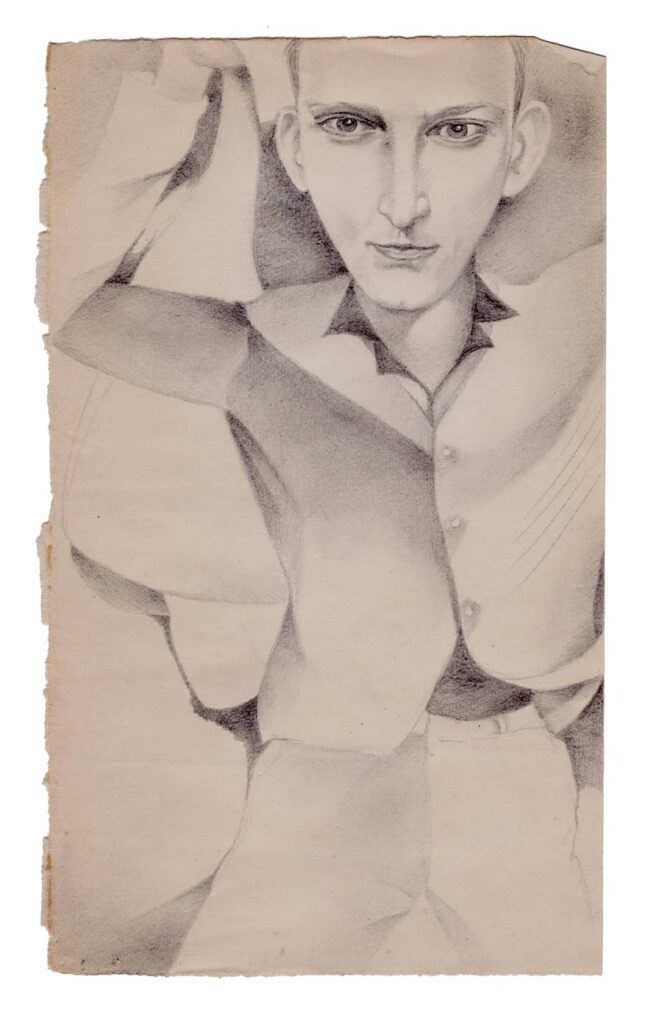
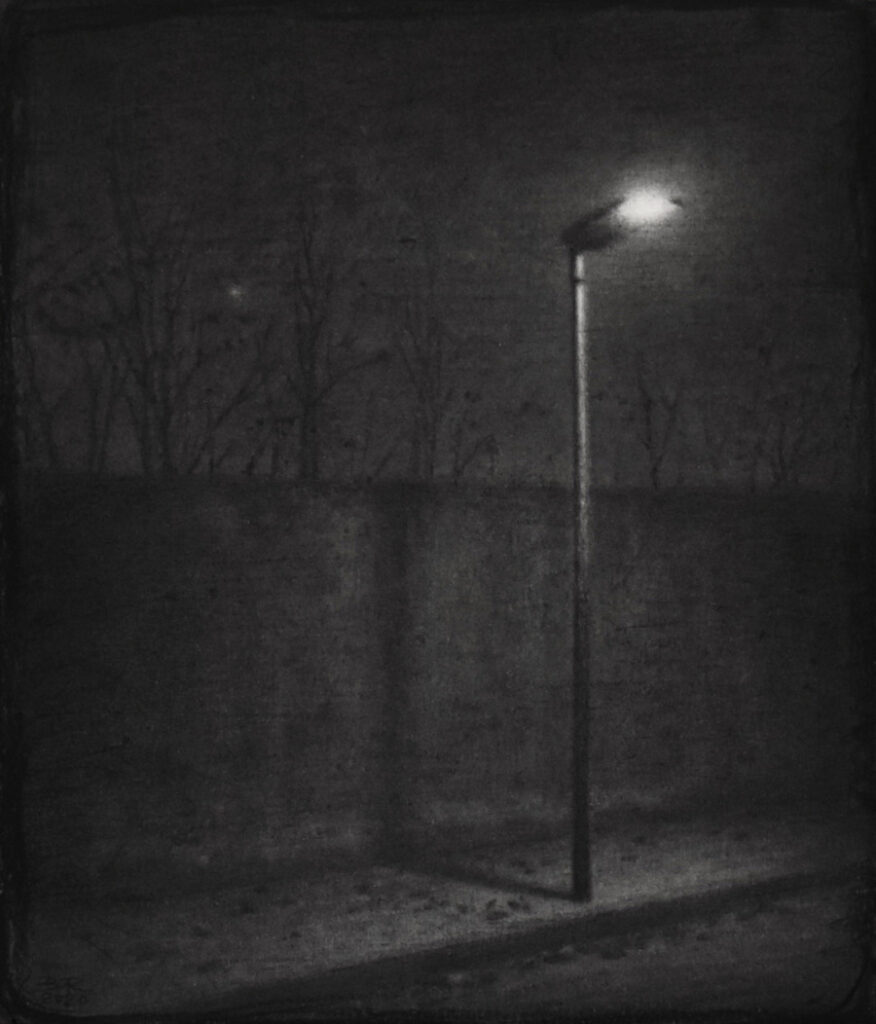
Fernando Martín Godoy (Zaragoza, 1975), based in London, develops his work mainly around painting to extend from there to other disciplines such as sculpture, drawing or collage. His work is based on reality -often on found images- and on the history of art itself in order to make a personal reading of the world, in which silence, gaps in information or what happens in the dark areas of memory take centre stage. His pieces often show a pulse between the real and the fictitious. Geometric games, subtlety and synthesis are essential elements in his visual universe.
Winner of the Grand Prix Santa Isabel de Portugal in 2006, his work has been shown in various art galleries and institutional spaces such as the CAB in Burgos, the Espacio Caja Madrid in Zaragoza, the CentroCentro in Madrid, the MACUF in La Coruña, the Centro Guerrero in Granada and the Fondation Suisse in Paris, and at fairs such as ARCO, Art Fair Tokyo, Arte Lisboa, Artesantander and Drawing Room. His works form part of private collections in Spain, the United Kingdom, France, Germany, Italy, Switzerland, Japan, Hong Kong and the USA, and are present in a good number of Spanish institutional collections.
