




LINEA NIGRA
Conde de Aranda 24
Madrid
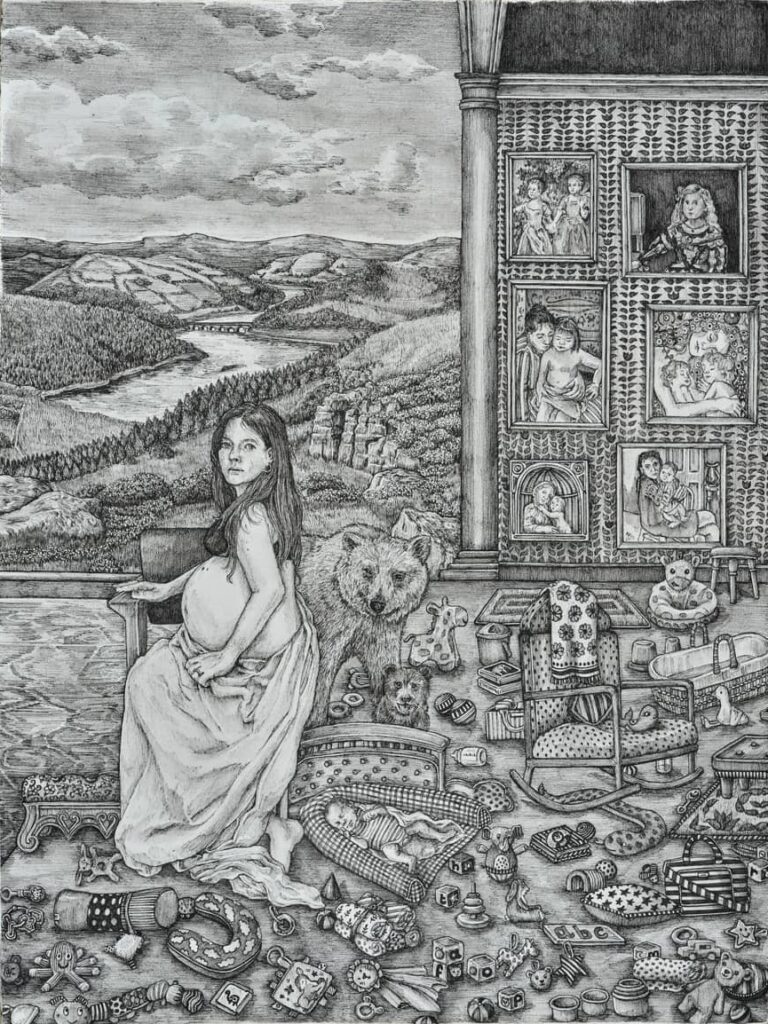
The linea nigra appears on the abdomen of many pregnant women from the second trimester onwards. Hormonal changes in their bodies cause the linea alba – a tendinous structure that runs vertically across the abdomen – to transform due to increased production of melanin, the pigment that gives our skin its colour. From the pubic bone to the navel, this line traces a winding path across women’s bodies, which usually fades gradually after childbirth. It is a somatic expression of what is happening inside them.
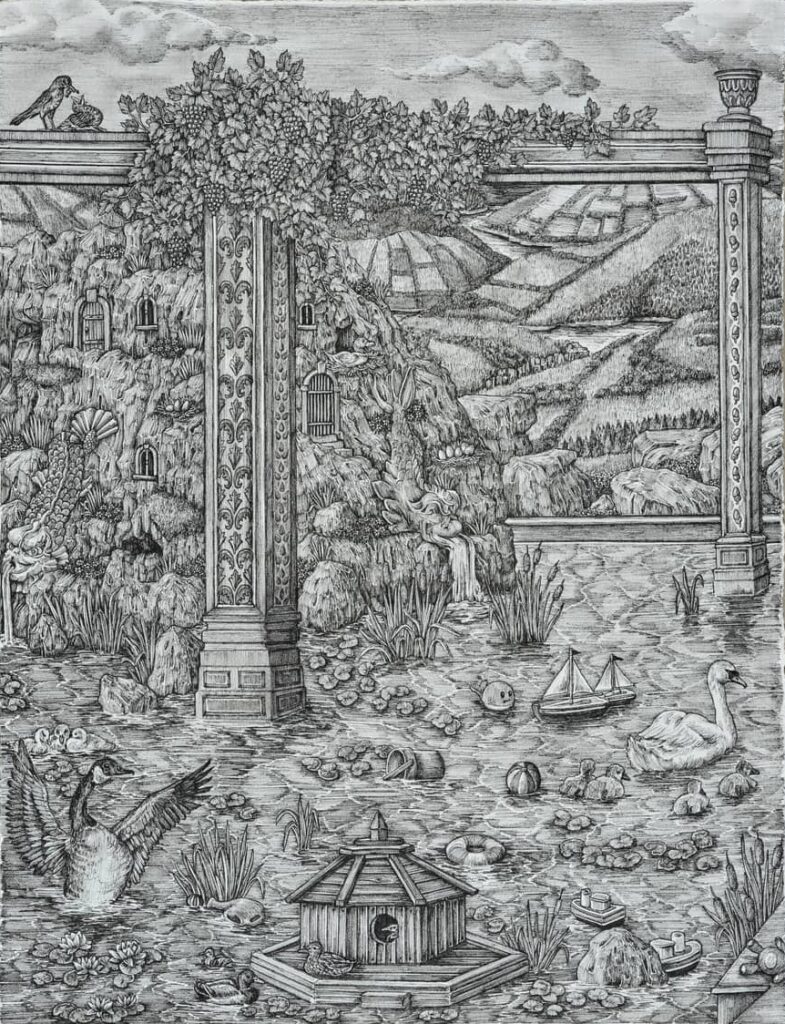
The line is also present in the origins of Art. Kora of Sicyon, the young Corinthian woman whom Pliny the Elder identifies as its creator – albeit in a subsidiary manner – had the intuition to trace the shadow of her lover with charcoal on the wall, by lamplight, before the young man left for war. She did so on one of the walls of her city’s Nymphaeum, and it remained there until Lucius Mummius sacked the city in 146 BC. The site, built around a fountain dedicated to the nymphs, was a public meeting place where all kinds of gatherings were held, including weddings and fertility rituals.
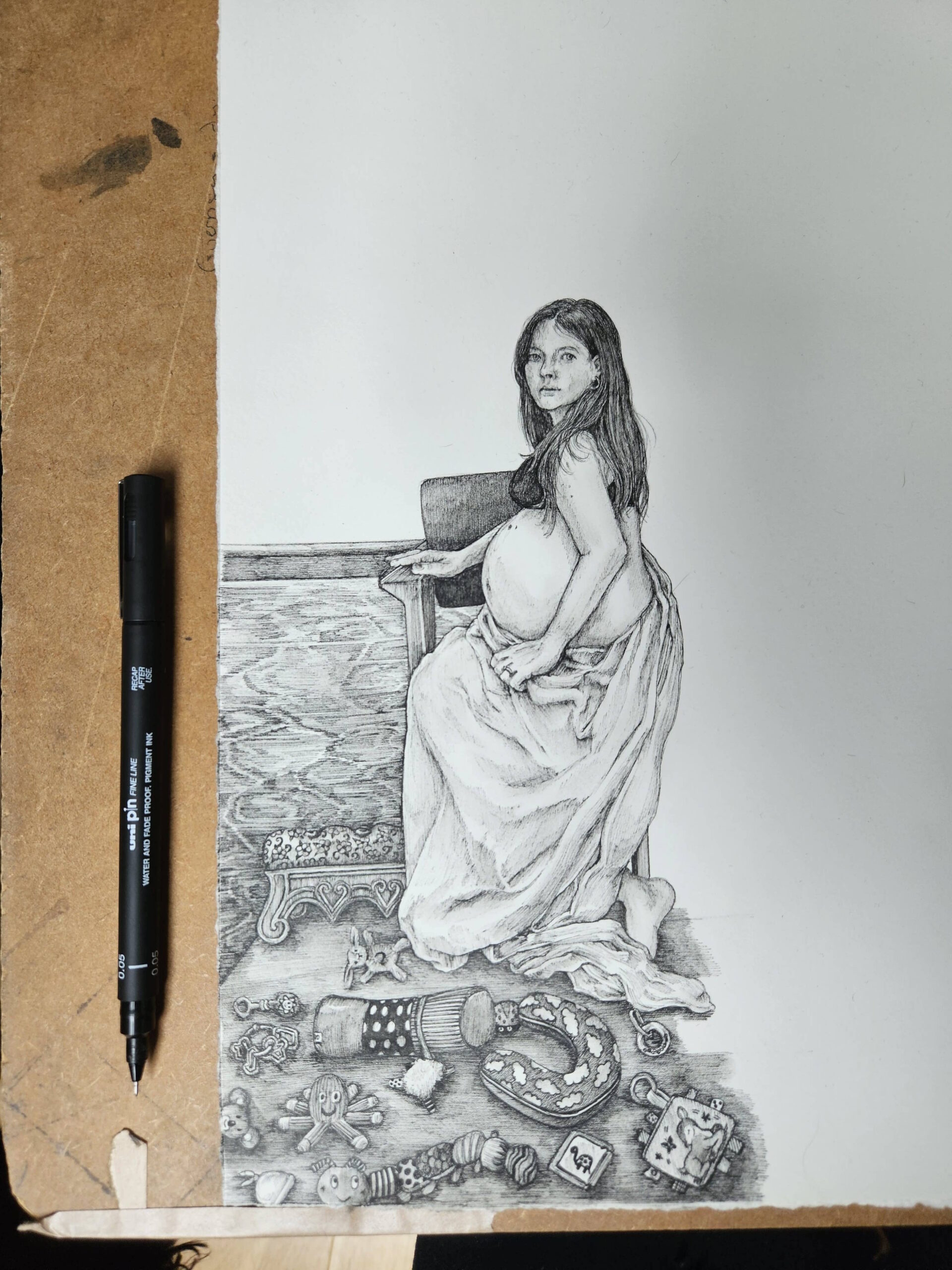
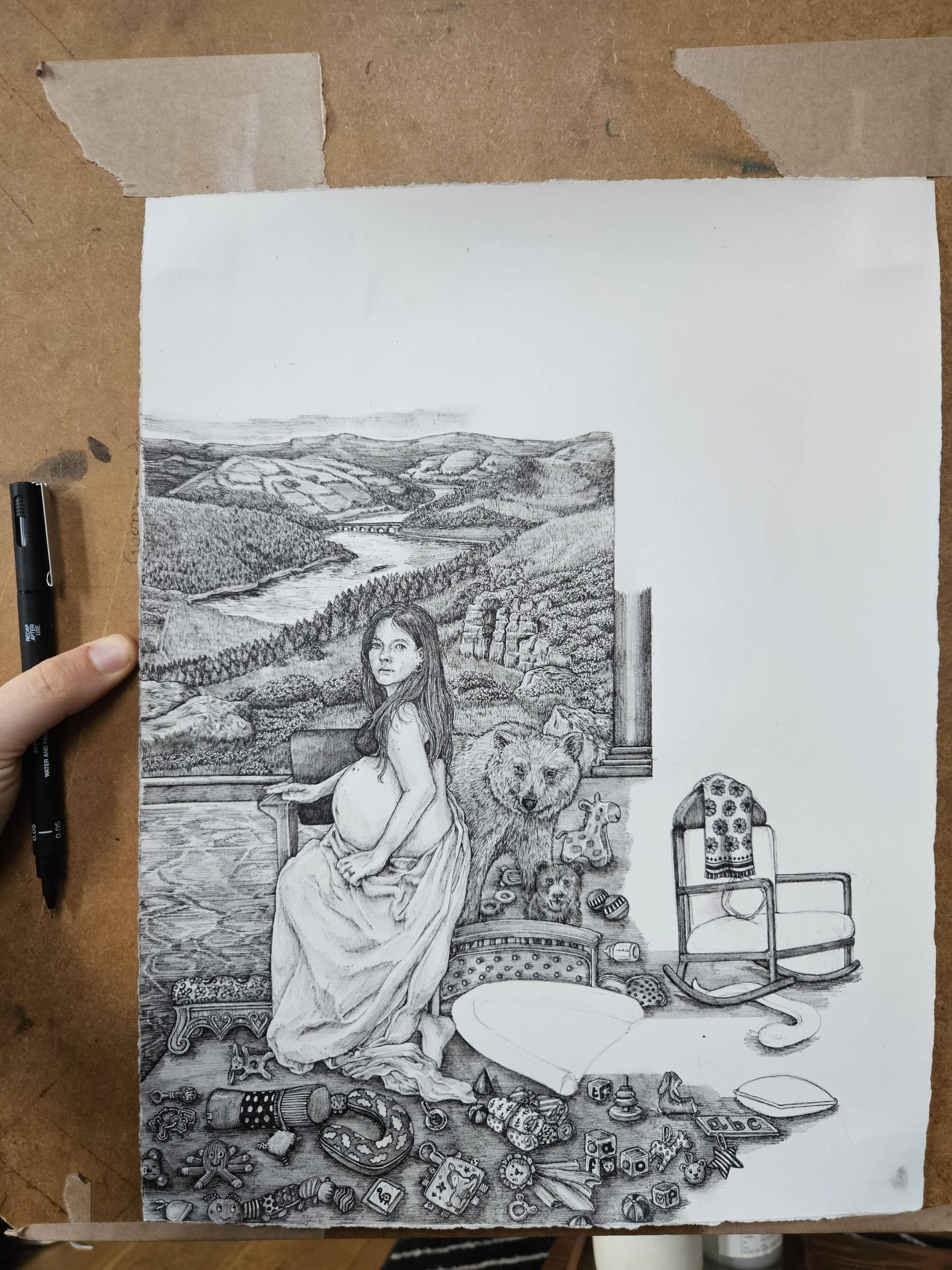
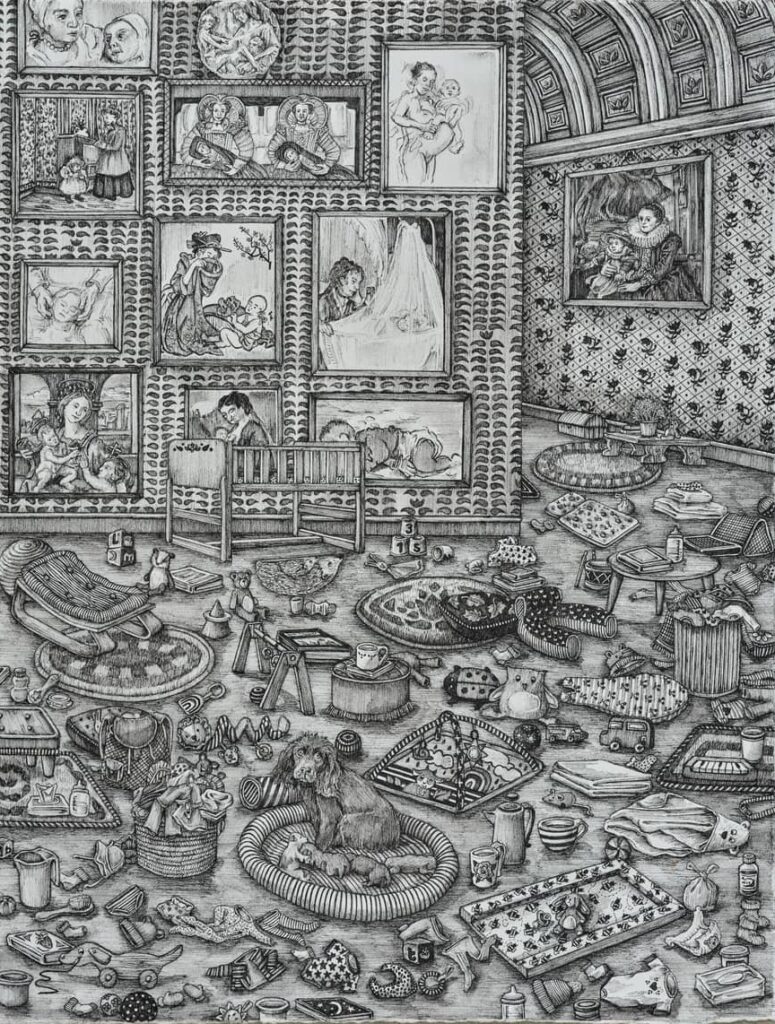
Water flowed through the nymphaea like the line runs across the paper in Olivia Kemp’s An Allegory of Motherhood. A line that contains her gesture and reflects her inner self, becoming a sign of identity. This is how it has appeared in Art theory since ancient times, as the origin of artistic expression and contingent upon its meaning. William Hogarth, in The Analysis of Beauty (1753), pointed out that the origin of beauty lies in that simple stroke. His ‘Line of Beauty’ is expressed as an elegant, undulating curve in the shape of an S – linea serpentinata – which embodies movement, vitality and visual pleasure. This line is the main source of beauty in nature and art, and is present in everything from human bodies to landscapes and objects, giving shape to the ideas that the artist expresses on paper.
Alejandro Martínez